
Best Digital Business Solutions for Online Entrepreneurs in 2026
A website and a few social media posts aren’t enough to run a business in 2026. Entrepreneurs need digital tools, easy ways to get paid, business accounts, ways to connect with customers, and marketing tools and systems to help grow their businesses.
Since online shopping is constantly changing, choosing the right digital business solution can help entrepreneurs better manage their daily tasks and provide a great experience for their customers.
This guide discusses the important digital solutions for online entrepreneurs. I’ll also discuss what to consider before choosing a service provider and how you can build a digital infrastructure for your business.
What are digital business solutions?
Digital business solutions are tools, services, platforms, and resources that are designed to help you run a business, communicate with people, accept payments, sell products, manage customers, and grow your business.
Depending on how you run your business, these digital business solutions may include:
* Payment solutions
* Business banking and financial tools
* Digital communication services
* Marketing platforms
* E-commerce tools
* Business verification services
* Cloud-based software
* Customer management systems
* Analytics and reporting tools
* Security and authentication solutions
The best mix of tools depends on your business location, what you sell, who your customers are, how you manage money, and how you work every day.
Why digital business solutions matter in 2026
Businesses that survive face a lot of competition. Customers want ways to pay, quick answers, professional websites, secure transactions, and helpful customer service.
Using digital tools can help entrepreneurs:
Improve operational efficiency
Cloud-based systems can eliminate tedious, repetitive tasks. These systems help business owners manage multiple tasks from a single digital space.
Support Payments
One of the most important parts of an online business is having a way to accept payments. A good payment solution helps businesses accept payments from customers while following all the rules and verification processes.
Improve customer experience
Customers want a way to communicate regularly and get help quickly. When digital tools work together, these moments feel much smoother.
Enable business growth
A small business can start with a few simple tools. As sales grow and your customer and employee numbers grow, you’ll eventually need a bigger and more advanced system.
Strengthen business organization
Using a platform for payments, customer engagement, marketing, and customer management makes it much easier to keep track of how your business is doing.
1. Online Payment Solutions
Accepting payments is essential for online entrepreneurs.
Depending on your business and where you live, you may want to consider payment processors, merchant services, digital wallets, bank transfers, and other practical ways to receive money.
When you look at a payment solution, consider the following:
* Supported countries and currencies
* Transaction fees
* How you’ll get your money (settlement and payment options)
* Verification requirements
* Whether your business is eligible
* Customer support
* Security features
* How it connects to your tools (integration options)
* Terms of service
Businesses should always use payment accounts as directed by the provider. It’s also important to make sure that all of your business information is accurate and easily verifiable.
2. Business banking and financial platforms
It’s a good idea to keep your business money separate from your personal money. This makes managing your accounts and finances much easier.
Digital banking and financial platforms often offer the following features:
* Business accounts
* Send money domestically or internationally
* Payment cards
* Your transaction history
* Manage your expenses
* Reports
* Use currencies
Before choosing a financial platform, entrepreneurs should check whether the service is suitable for their specific business type and the country in which they operate.
3. E-commerce and online store tools
If you sell products or digital content, you need a robust e-commerce setup.
An online store may need:
* A way to manage products
* A shopping cart
* A checkout page
* A way to accept payments
* Manage your stock (inventory)
* Track orders
* Customer accounts
* Data and analytics
* Send automated emails
An e-commerce setup should be easy for customers to use, but it should also provide the business owner with the tools they need to run everything.
4. Digital Marketing Solutions
It’s not that people will automatically find your product. Online businesses also need a marketing plan.
Digital marketing solutions can include:
* Search Engine Optimization (SEO)
* Media Marketing
* Email Marketing
* Content Marketing
* Paid Ads
* Video Marketing
* Influencer Marketing
* Encouraging More People to Buy (Conversion Optimization)
SEO is very helpful for businesses that want to drive visitors to their site for a period of time without paying for every click. Instead of just fighting for the toughest keywords, entrepreneurs can build authority by writing helpful articles about their products and services.
5. Communication and Customer Support Tools
Talking to people professionally is an important part of online businesses.
Depending on your business type, you can use:
* Business email
* Live chat
* Help desk software
* Messaging on social media
* Video calls
* Help pages (knowledge bases)
* Customer support tickets
Having a way to help people can help businesses answer questions and improve their service quality.
6. Cloud-based business software
Cloud software allows entrepreneurs to view their business information from any device or location.
Common types include:
* Project management
* Accounting
* Document management
* CRM (customer relationship management)
* Teamwork
* Scheduling
* Analytics
* Stock management
Cloud-based systems are great for teams and online businesses that don’t operate from a physical office.
7. Security and account protection
Security should be a part of every business plan.
Entrepreneurs should consider the following:
* Unique passwords
* Two-factor authentication
* Password manager
* Secure web hosting
* Regular software updates
* Control who can access what
* Backup system
* Monitor for unusual activity
Businesses should only allow authorized individuals to access their accounts and keep their ownership and verification information up to date.
8. Business verification and compliance
Many financial and digital platforms will ask you to prove who you are or where your business is located.
Depending on the service provider, verification may include:
* Business name
* Business registration information
* Owner ID
* Business address
* Tax information
* Website details
* Supporting documents
Entrepreneurs should always provide accurate information. Trying to bypass verification or not providing information may result in your account being locked or closed.
How to Choose the Right Digital Business Solution
There is no one solution that works for every entrepreneur. Before choosing a platform or service, consider what you need.
Step 1: Determine your business needs
First, figure out what you need. Do you need to accept payments, market, manage customers, use business banking, or run an e-commerce store?
Step 2: Check eligibility
Check if the service provider serves your industry in your country and if you meet their verification requirements.
Step 3: Compare costs
Don’t just look at the price. Check transaction fees, setup costs, withdrawal fees, and currency conversion costs.
Step 4: Review security
Check security controls, ways to prove your identity, how to recover your account if you lose it, and how they protect privacy.
Step 5: Evaluate integrations
Your tools should work well with each other. For example, your store, your payment system, and your accounting software shouldn’t force you to do manual work.
Step 6: Consider scalability
Choose a business solution that can keep up with your business growth as your sales, customers, and workload increase.
Common mistakes entrepreneurs should avoid
Choosing a business solution just because it’s cheap can lead to problems later.
Some common mistakes include:
* Choosing a platform without checking if it’s allowed to use it
A service might be great, but it might not be available in your country or for your type of business.
* Using business information
No matter which platform you use, your business information should be consistent and true.
* Ignoring terms of service
Each platform has its own rules. Businesses should read the account usage rules, payment rules, and other terms and conditions.
Relying on a digital platform
It’s wise to have a backup plan. Having multiple options can reduce your risk, as long as those options are realistic and compliant.
* Ignoring cybersecurity
Not using passwords or two-factor authentication can put your business assets at risk.
How AcctroBoost meets the needs of digital businesses
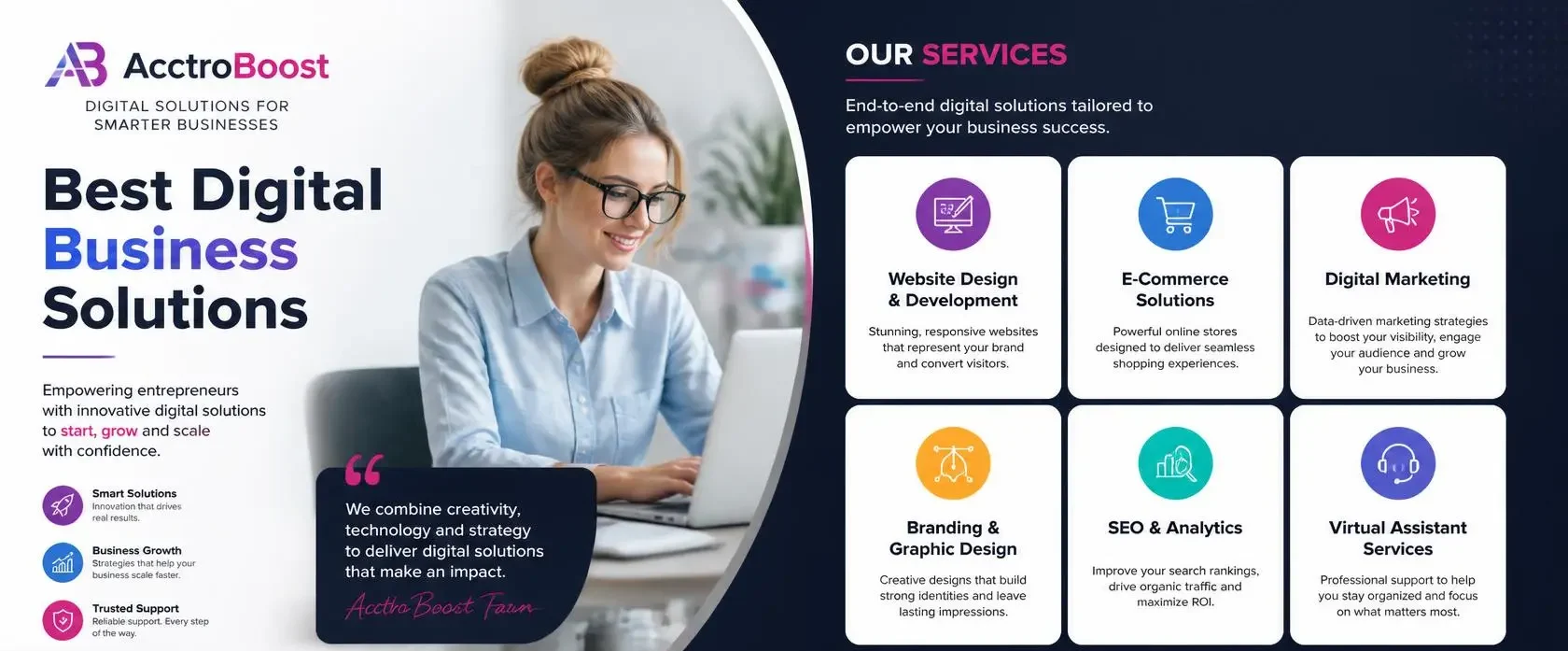
AcctroBoost acts as a marketplace for a variety of solutions. It is a digital resource
AcctroBoost’s range of services includes accounts, business payment solutions, marketing services, and other resources for online businesses.
It’s important for entrepreneurs to make sure that a solution fits their business needs and can be used legally according to the provider’s rules.
When looking at any service, you should check the rules for who can join, how they verify people, security, and terms and conditions before making a decision.
Building a Reliable Digital Business Stack
An online business typically requires multiple tools.
Instead, entrepreneurs can build a business stack using several layers that work together:
Business Foundation:
Website, domain, hosting, business email, and business legal information
Financial Infrastructure:
The right business banking and payment solutions.
Marketing Infrastructure:
SEO, content marketing, social media, email marketing, and advertising.
Customer Infrastructure:
CRM, support tools, live chat, and multiple ways to talk to customers.
Security Infrastructure:
Password management, two-factor authentication, backup, and access control.
Analytics Infrastructure:
Website analytics, which examines search performance, tracks sales, and generates business reports.
The goal is not to use all the tools. The goal is to use the tools for your business in a way that you can manage them properly.
The Future of Digital Business Solutions
The world of business will continue to change. Things like intelligence, automation, real-time data, and connected software will likely change the way entrepreneurs work.
Technology alone cannot make a business successful.
A long-lasting digital business still requires:
* An effective service
* Customer trust
* Business information
* Stable operations
* Cybersecurity
* Transparent communication
* Good marketing
* Compliance with all regulations
Entrepreneurs who use technology alongside business practices will be prepared for the changes in the digital market.
Final Thoughts
The best digital business solutions are not always the ones that cost the most or have the most features. The best solutions are those that fit your business needs, your location, your industry, your budget, and your business growth plans.
For entrepreneurs in 2026, payment infrastructure, digital banking, e-commerce tools, marketing platforms, communication systems, cloud software, security tools, and analytics—all of these can form the foundation of a modern digital business.
Before choosing any service, compare its features, pricing, regulations, security, connectivity, and terms of service. Building a digital framework step by step can help entrepreneurs operate better and prepare for long-term growth.
Frequently Asked Questions
1. What are digital business solutions?
Digital business solutions are tools and services that help a company manage things like payments, marketing, communicating with customers, selling products online, managing money, and security.
2. What are the best digital business solutions for entrepreneurs?
The best digital business solution depends on your business needs. Most people look for things like payment tools, business banking, online store platforms, customer management systems, marketing tools, cloud software, data tracking, and cybersecurity solutions.
3. Why are digital solutions important for businesses?
Digital solutions help online businesses operate faster and better. Digital solutions also make it easier to talk to customers, handle payments, and grow the business over time.
4. How do I choose a business service?
You should look at the price, features, and how secure the service is. It’s also wise to check if the digital business service works with your tools and if they offer good support if you have any issues.
5. Are the payment solutions secure?
The security of the payment solution depends on the company you choose and how you use your account. To stay safe, businesses should choose a familiar digital payment solution, keep all security settings turned on, and keep passwords secret.
6. Do online businesses need digital tools?
Online businesses use a variety of tools because one tool can’t do everything. You shouldn’t use too many tools. It’s better to choose tools that work together.
7. What should businesses consider before using a payment platform?
Before choosing a payment platform, check which countries and currencies the platform accepts. You should also check your fees, how they pay you, and how secure the payment platform is.
8. How can AcctroBoost help entrepreneurs?
AcctroBoost gives people access to a variety of digital business resources and digital business solutions. If you use AcctroBoost, you should review each step to ensure you are following all policies.
9. What is the role of cybersecurity in business?
Cybersecurity is there to keep your business accounts, customer details, and money safe. Cybersecurity helps stop strangers from getting into your website or your private digital files.
10. Should a small business invest in solutions?
Yes, a small business should invest in solutions, but only if they actually need them. I think entrepreneurs should start with the important tools first and then buy more digital solutions as the business gets bigger.